Haunted Forest
GENRE: 3D Action Adventure / PvE
TYPE: Blockout
ENGINE: Unreal Engine 5
TOOLS: AutoCAD, Photoshop, DaVinci Resolve, Audacity, JakubW controller pack
FOCUS: Exploration flow, landmark guidance, encounter pacing
ITERATIONS: 8
PLAYTESTS: 5
ROLE: Level Designer
- Designed a third-person UE5 level focused on exploration, combat pacing, puzzle beats, and readable traversal.
- Iterated the layout through multiple playtests to improve route clarity, enemy placement, lighting guidance, and pacing.
- Used landmarks, vistas, lighting breadcrumbs, and staged encounters to guide the player through a dark fantasy forest without over-relying on UI.
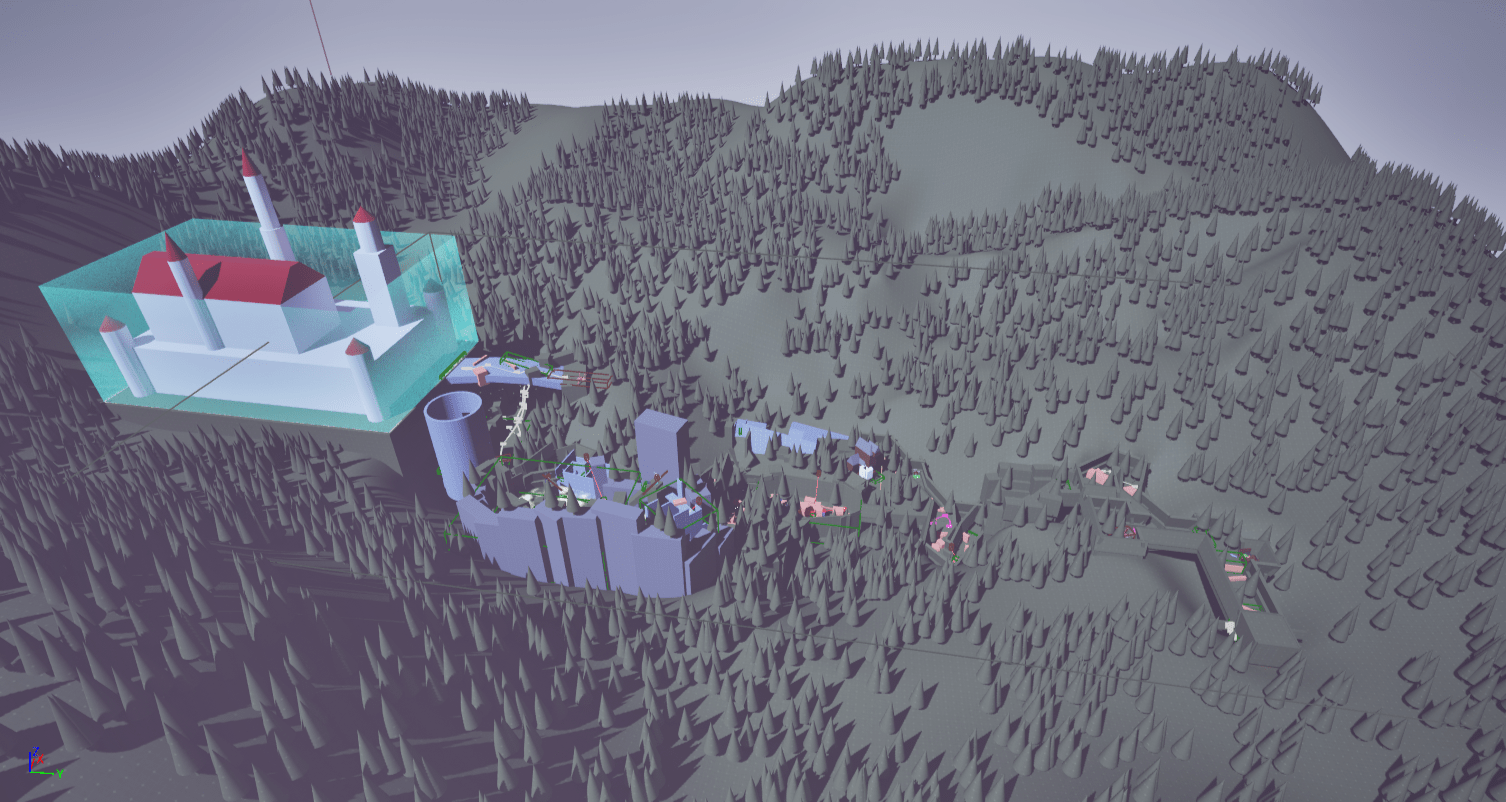
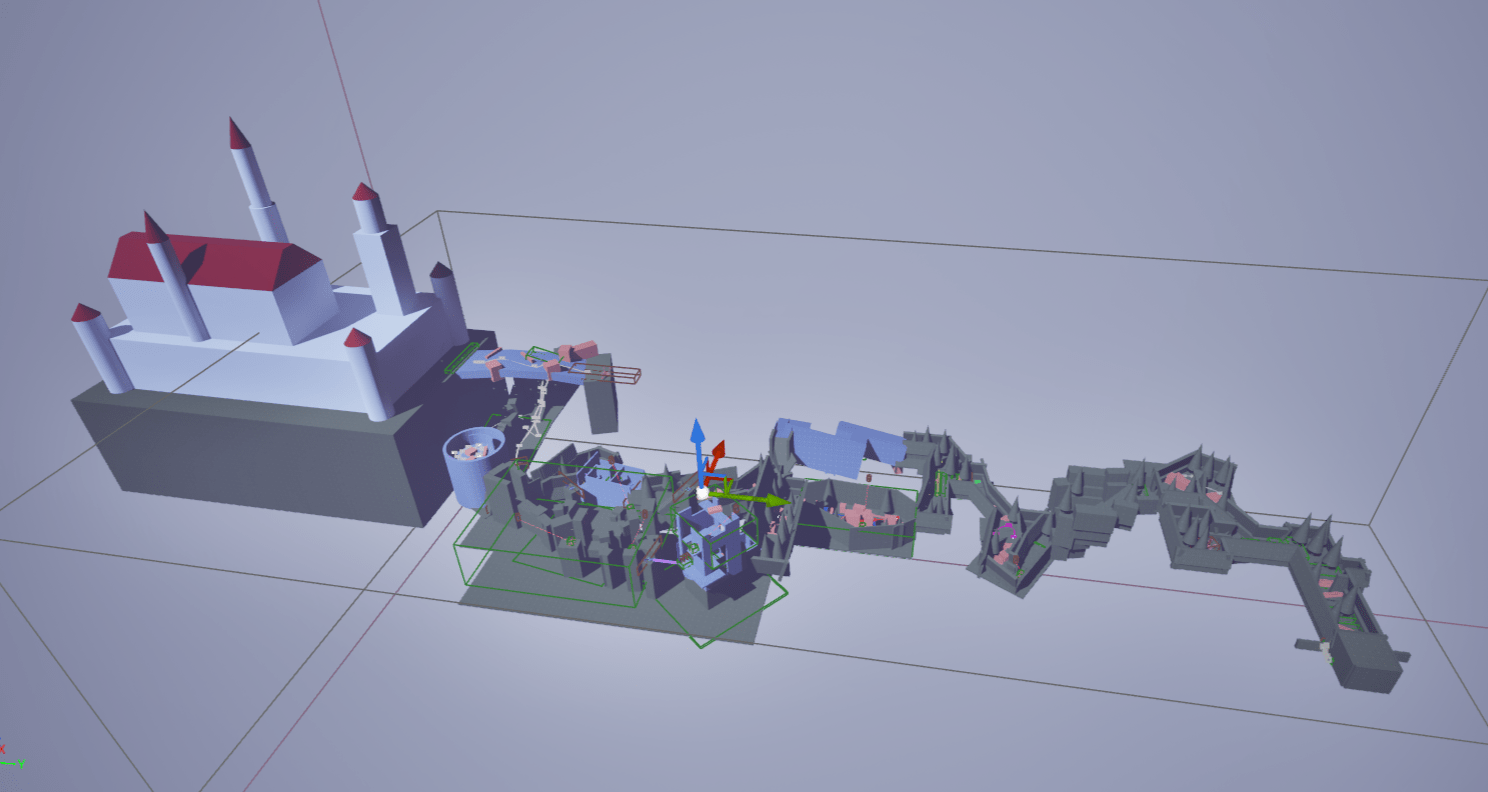
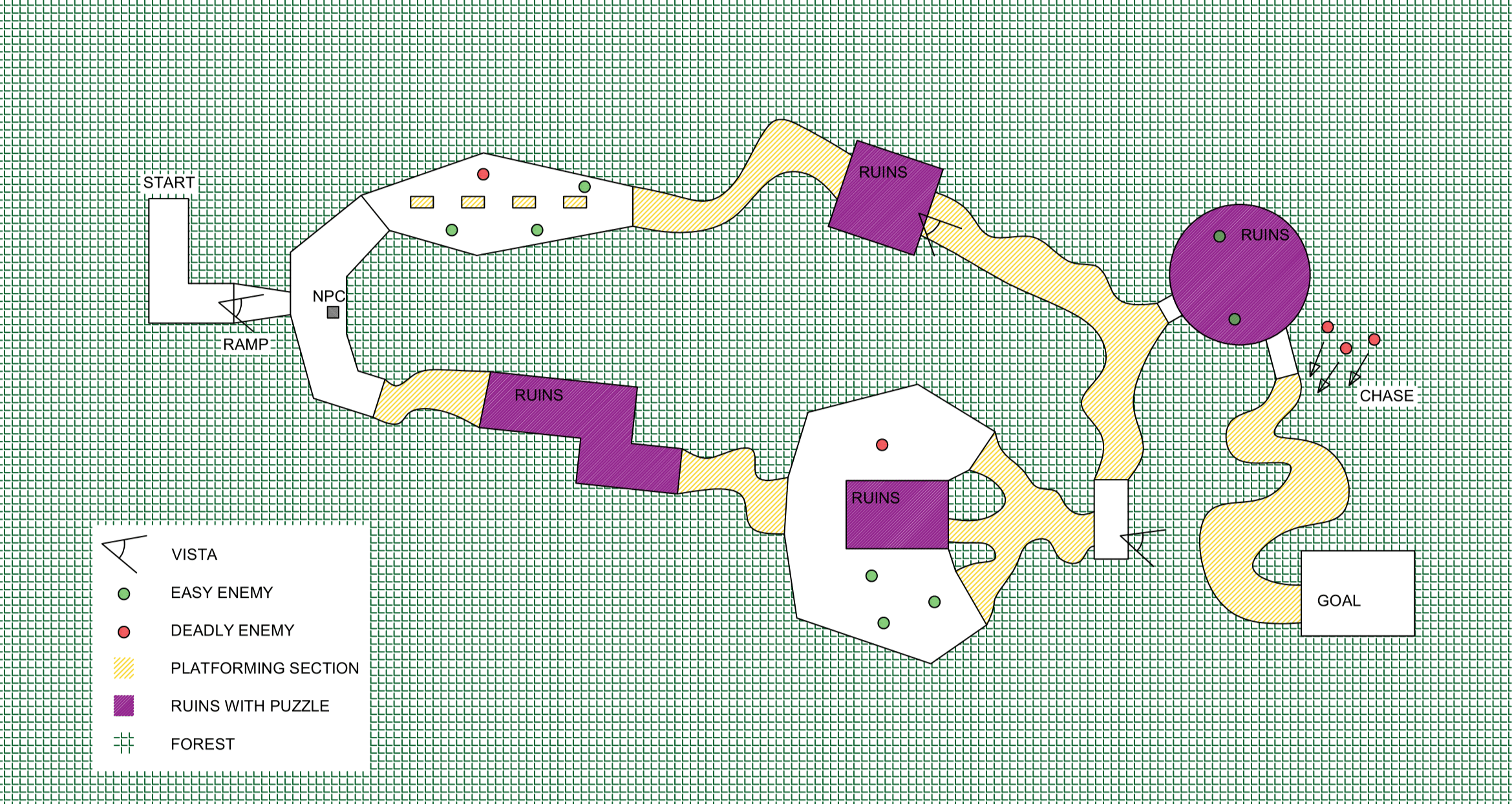
Level overview
Design Goals
The goal was to create a dark fantasy third-person level that blends exploration, combat, puzzle moments, and environmental storytelling into a readable playable sequence.
The level was designed around three main intentions:
- Use the White Tower as a recurring landmark to orient the player across the forest.
- Teach threats and mechanics gradually through safe introduction, escalation, and payoff.
- Guide navigation through spatial composition, vistas, lighting, and environmental cues rather than constant explicit markers.
Highlight 1: Tutorializing
Enemy types are introduced in controlled spaces before being combined later in the level. Each encounter teaches a specific behaviour: ambient threat, high-ground pressure, ranged attacks, or set-piece escalation.
Highlight 2: Vistas / Landmark Guidance
The White Tower works as the main visual anchor of the level. Vistas are placed along the route to reorient the player, reinforce progress, and keep the final objective present even when the path twists through the forest.
Highlight 3: Lighting Breadcrumbing
Small light sources are used as local breadcrumbs to pull the player through darker spaces, highlight traversal points, and suggest safe direction during high-pressure moments.
Iteration Process
The first roughout translated the 2D plan into a playable 3D space, establishing the main route, large landmarks, traversal rhythm, and early exploration/combat areas.
Early testing helped reveal that the level had potential in scale and atmosphere, but the route structure was still too broad and some player goals were not clear enough.
After the first tests, the layout was reworked into a clearer and more purposeful route. The White Tower became a stronger long-term objective, paths were simplified, and key spaces were repositioned to improve progression.
This pass also absorbed lessons from the 2D planning stage: keeping alternate paths readable, reducing unnecessary complexity, and using vistas to reconnect the player with the main goal.
These passes added more playable structure through enemy placement, puzzle beats, triggers, and simple scripted moments.
Playtests showed that the level needed stronger pacing and clearer challenge escalation, so enemies were introduced more gradually, encounters were spaced with more intention, and scripted beats were used to break up exploration and reinforce progression.
The final passes focused on lighting, atmosphere, environmental storytelling, and readability. Light sources were used as breadcrumbs, darker areas gained stronger contrast, and props helped communicate the ruined forest setting.
This pass also integrated the lighting iteration: improving navigation in low visibility, guiding players toward key routes, and making the level feel more cohesive without relying only on UI markers.
Outcome
Haunted Forest became my most complete personal level design study, developed through multiple iterations and playtests.
The final version improved the original layout with a clearer route structure, stronger landmark visibility, better enemy pacing, lighting-based guidance, and more focused worldbuilding. Playtests helped identify moments of confusion, weak objective readability, uneven pacing, and unclear enemy escalation, with each iteration turning those issues into stronger route structure, clearer guidance, and better rhythm.
The project helped me practice the full level design loop: planning, greyboxing, testing, revising, scripting support, and final presentation.