FAR CRY 5 LEVEL
KILL THE TARGET AND ESCAPE
Idea for the level
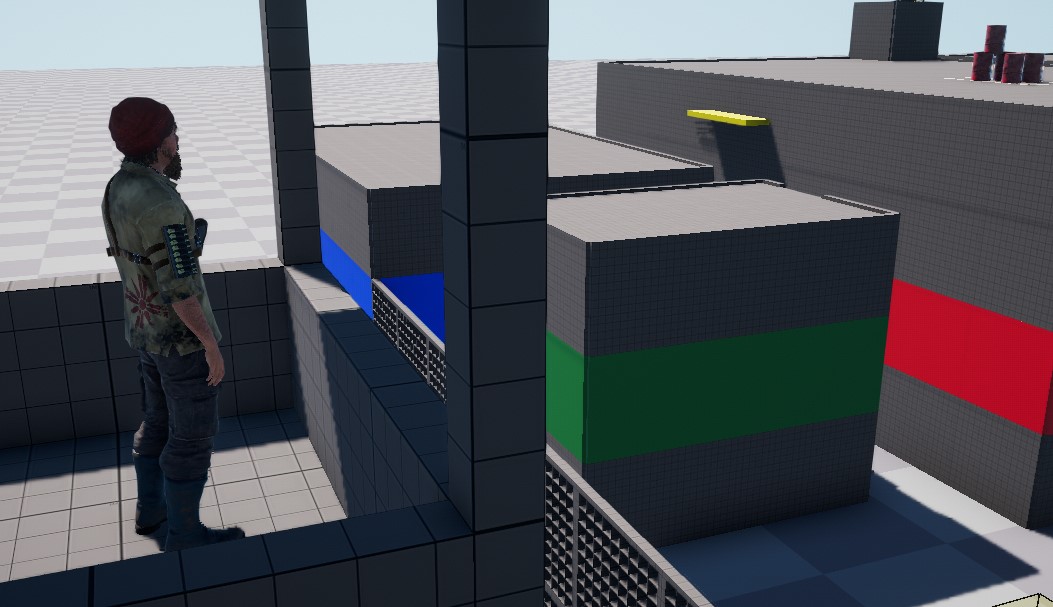
The idea for this level was to explore different concepts:
- Feelings of tension and oppression: Constant menaces from various directions, very narrow routes between high buildings. Confusion as to what route to pick.
- Non-linear design: open plan with many paths and approaches.
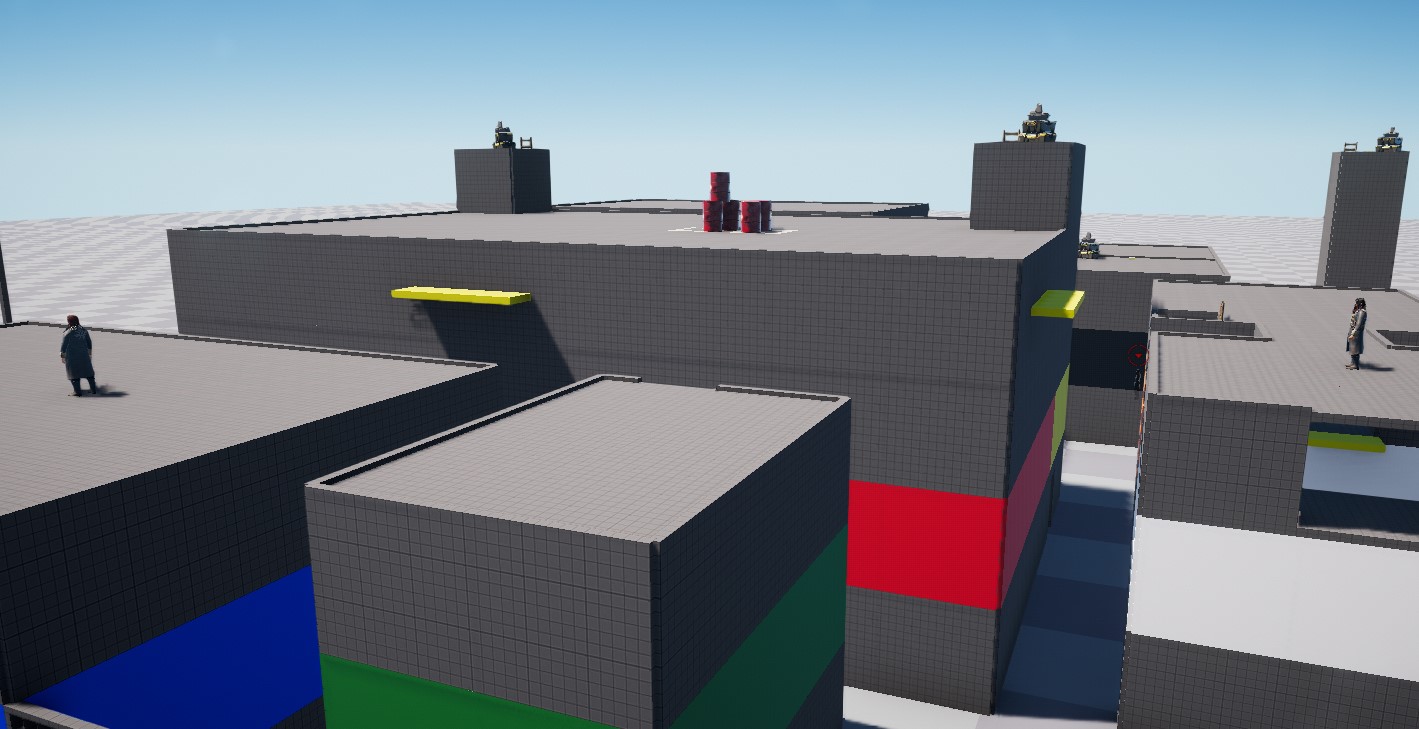
- Verticality: Use of rooftops to access supplies and for clarity on the route to take.
- “Pain” points: Situations where advancement is very difficult and/or dangerous.
- “Chaos” points: Contained elements that can wreak chaos if released.
Design philosophy
Use of limited number of assets to focus on functionality of the level.
- Assets used:
- Greyboxes
- Crates for cover
- Necessary “furniture”: ladders, breakable wooden planks, trapdoor entrance, barricade cover
- Exploding barrels (to break parts of destructible walls)
- Assets used:
Photo reference
Top down layout

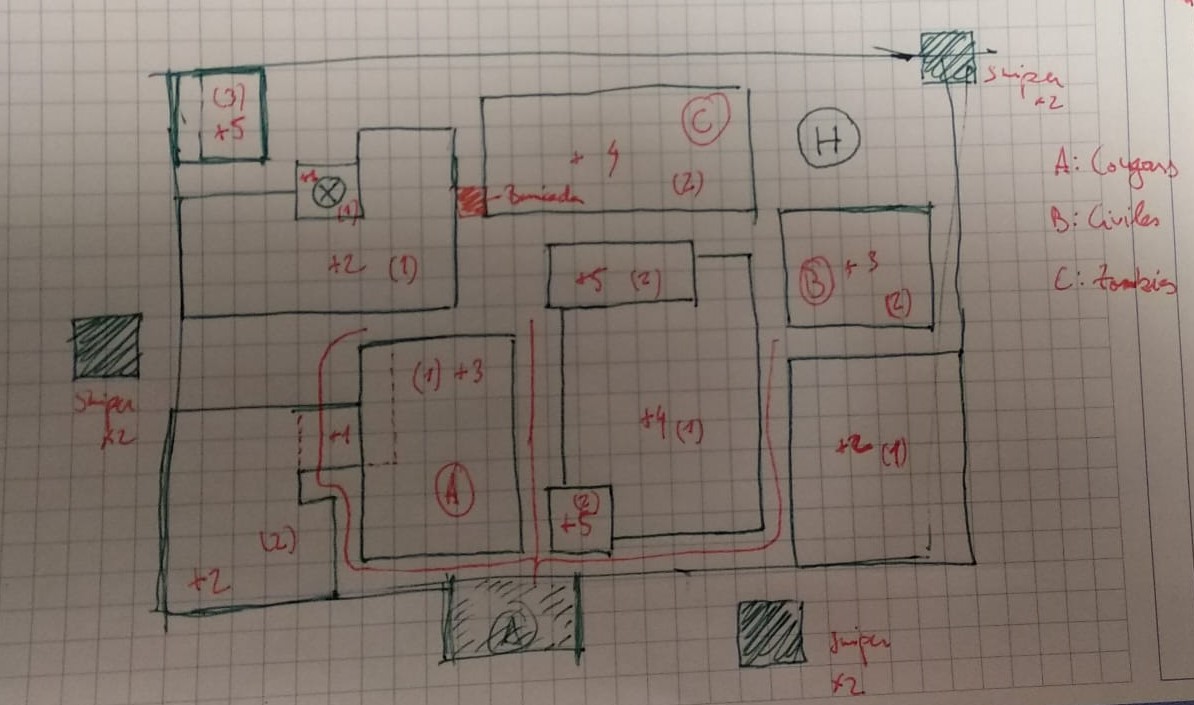
First rough draft
Establishing the general layout, possible routes and AI placement.
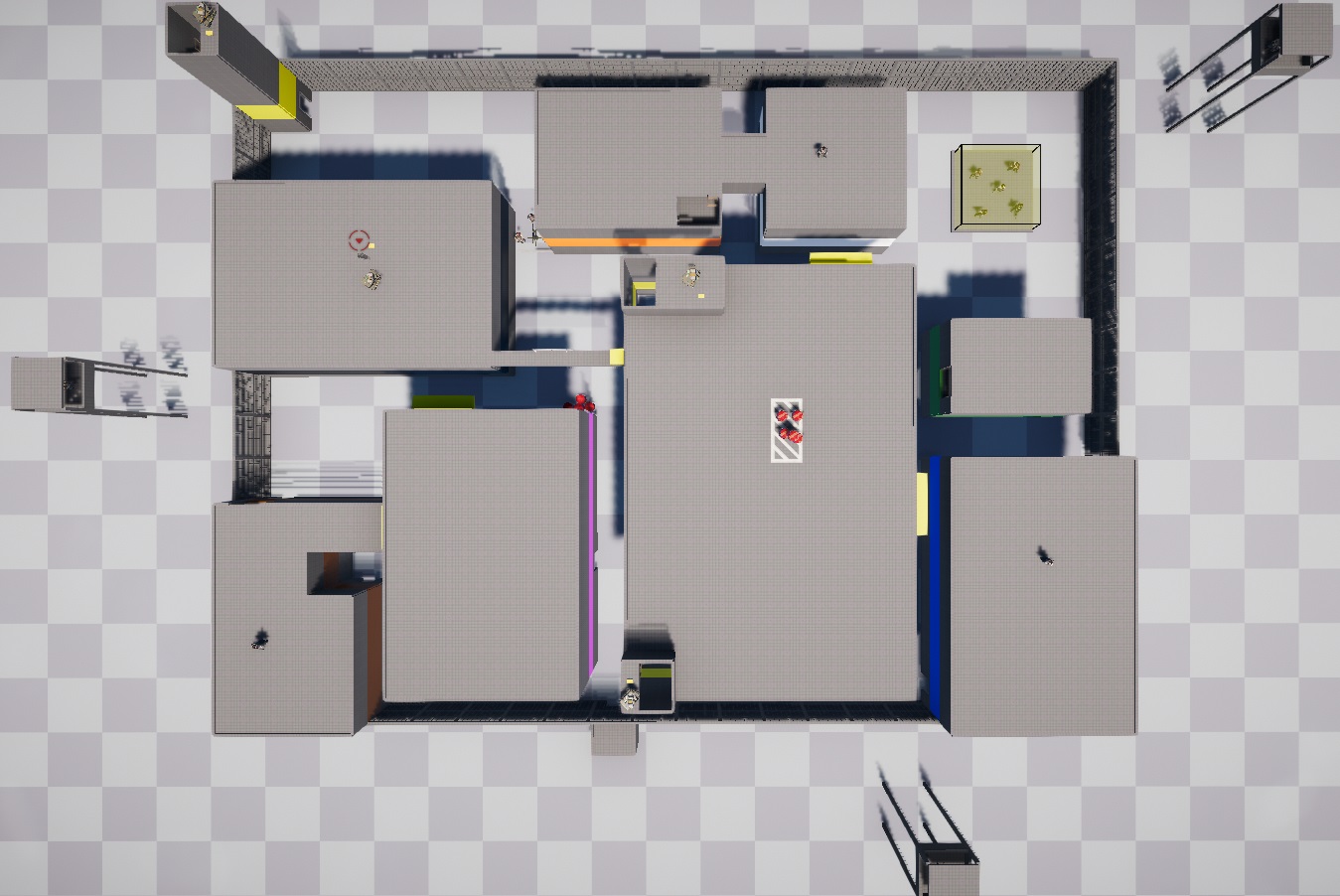
Final top down layout
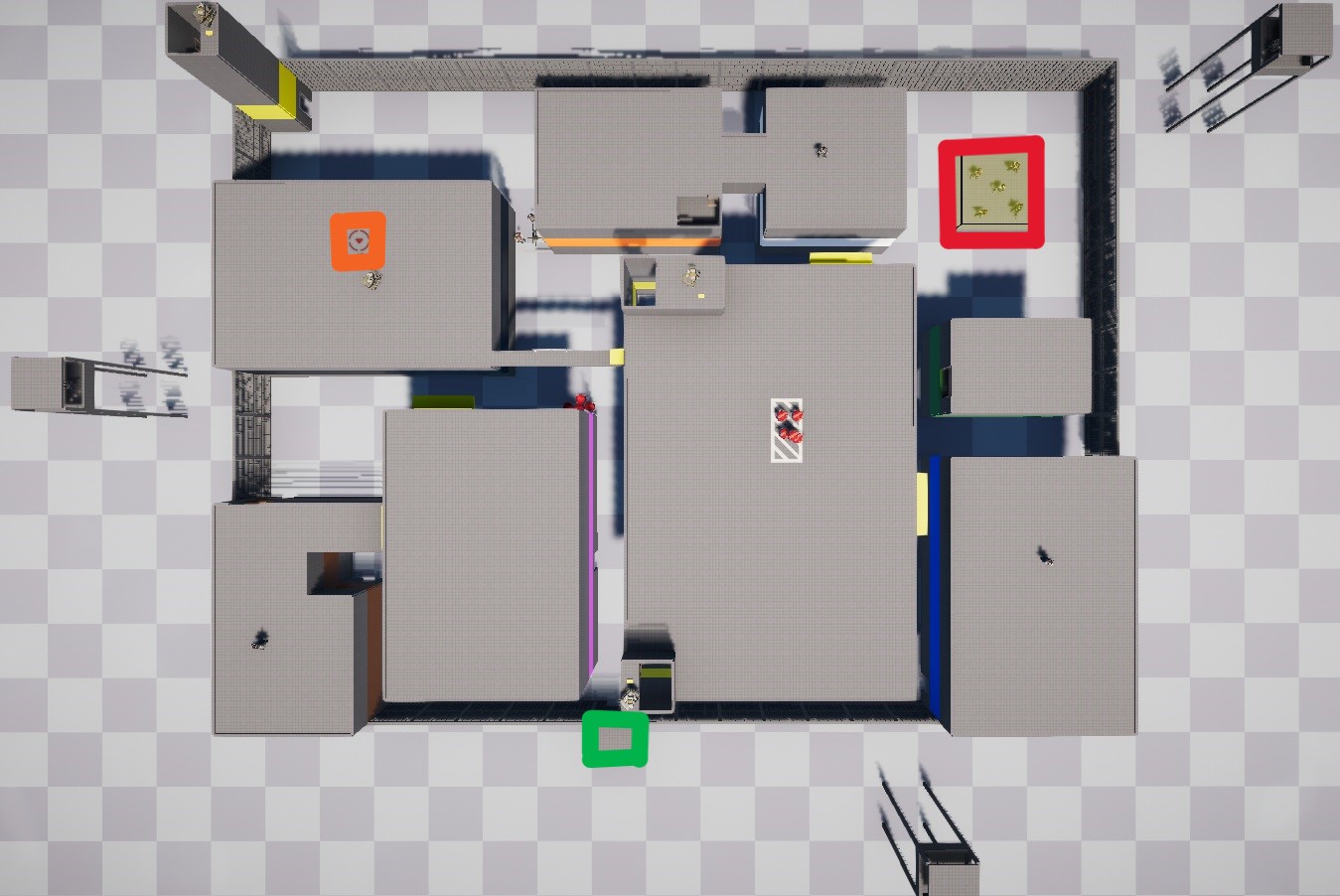
Start-objective-finish
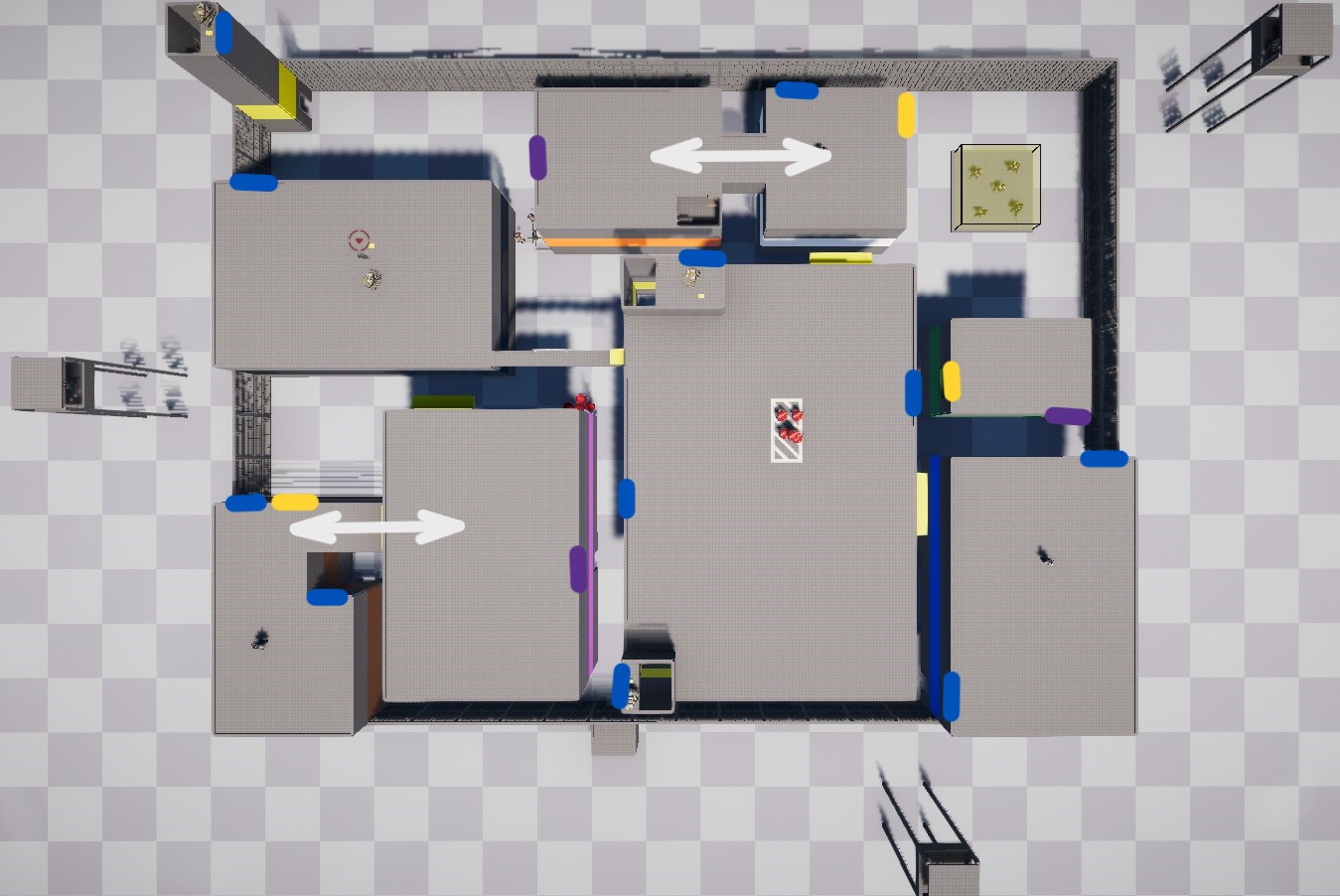
Doors, windows and internal corridors
- Building entrances (blue)
- Breakable blocked entrances (purple)
- Window openings in second floor (yellow)
- Internal conection between buildings (white)
- Spawn point (green)
- Objective (orange)
- Extraction point (red)

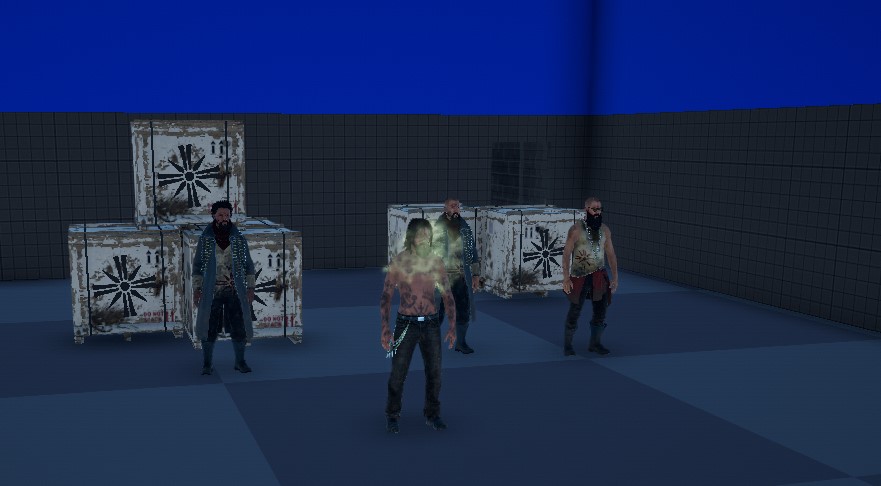
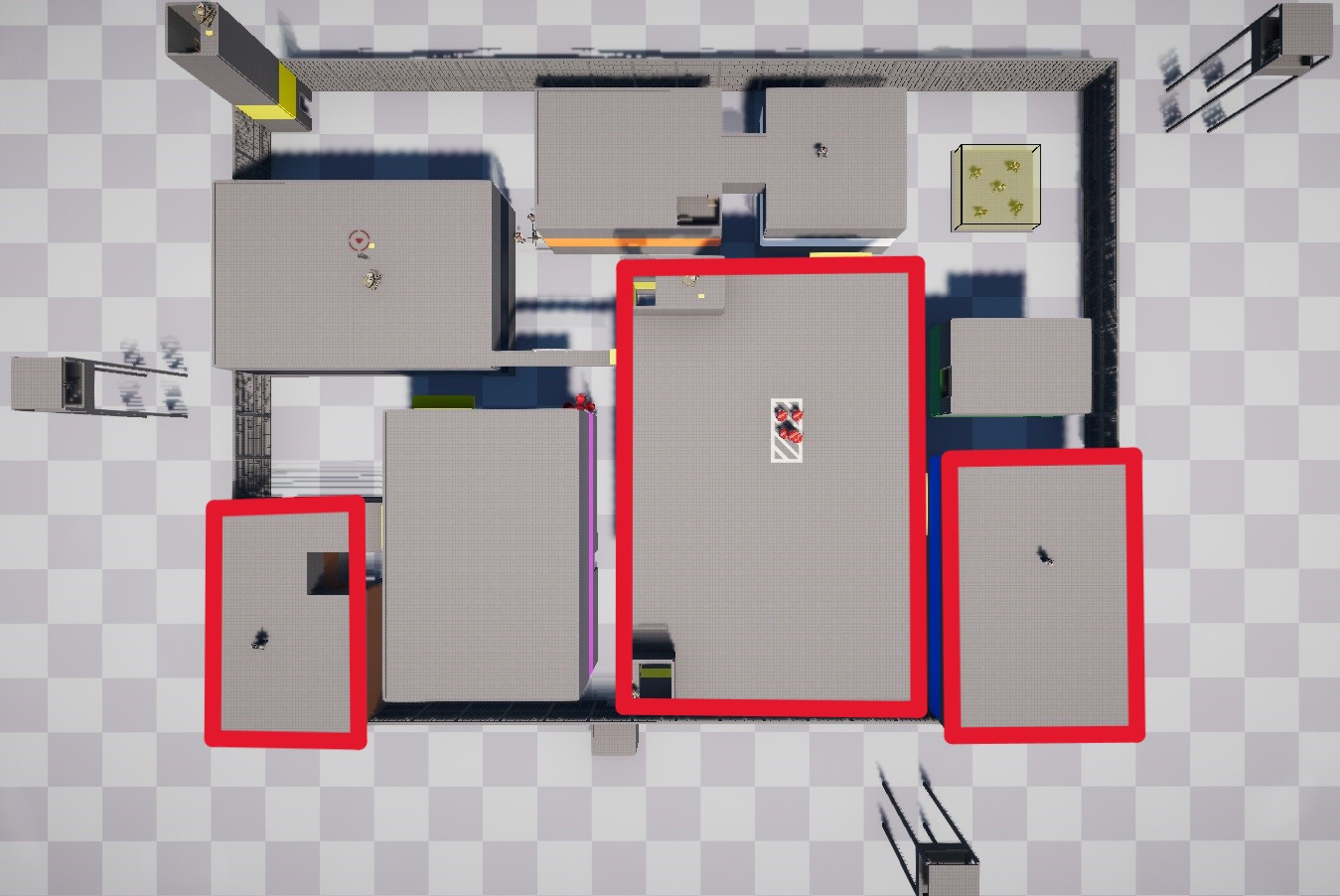
Guard platoons
Buildings guarded by small platoons (the biggest building's platoon is reinforced with rocket launcher and heavy unit).
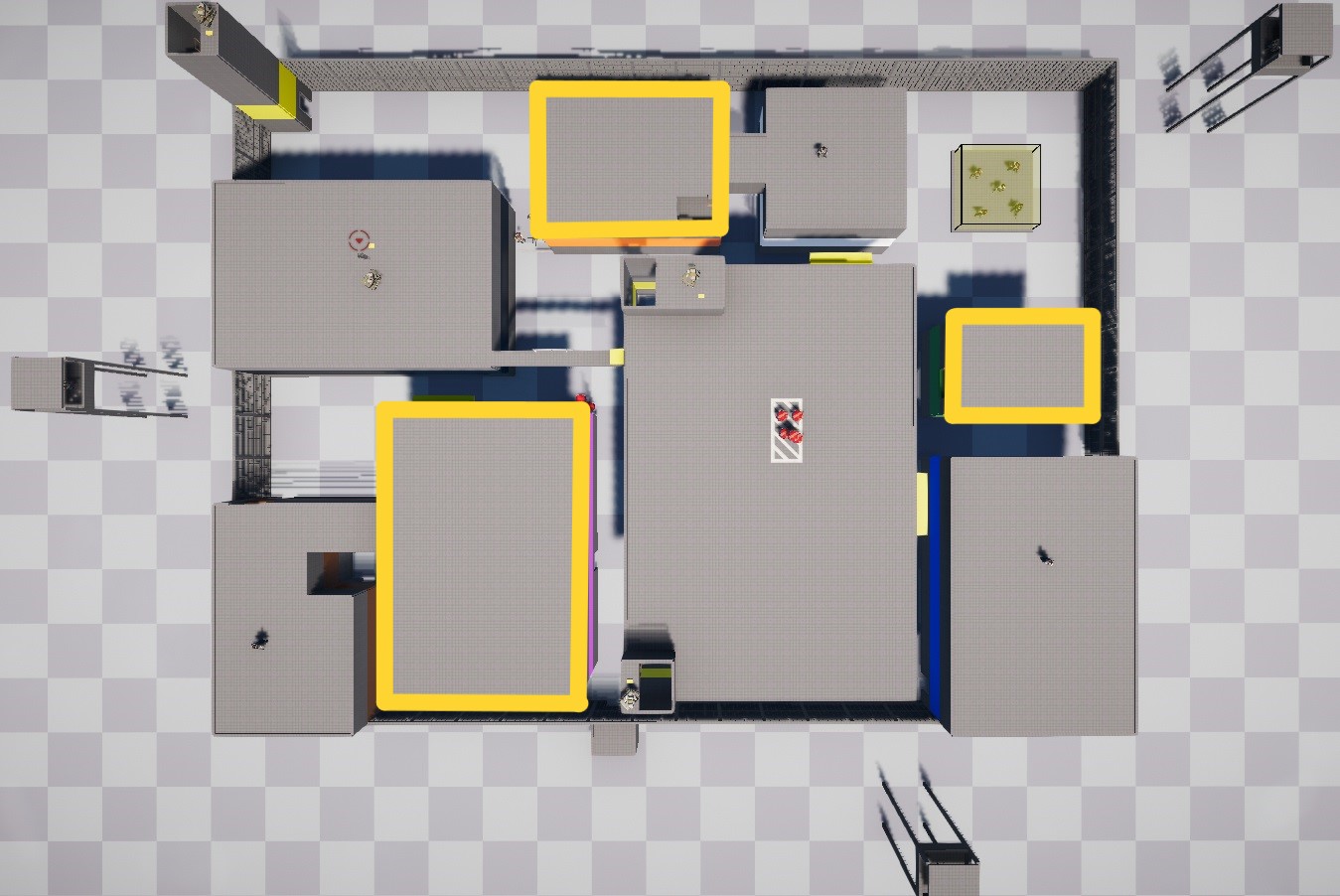
"Chaos" elements
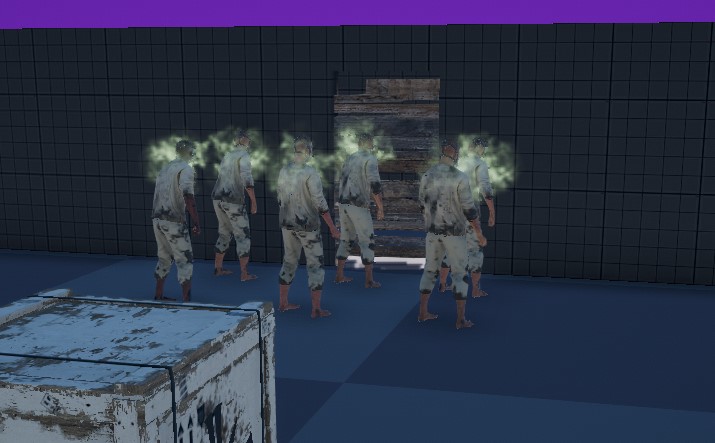
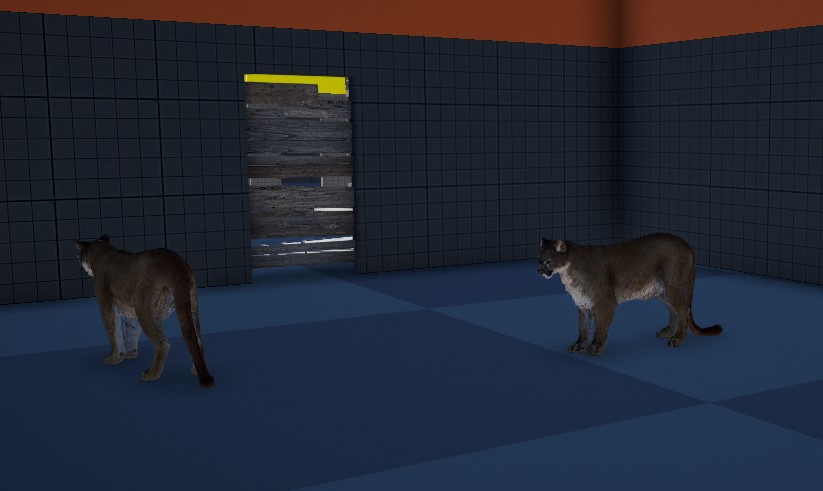
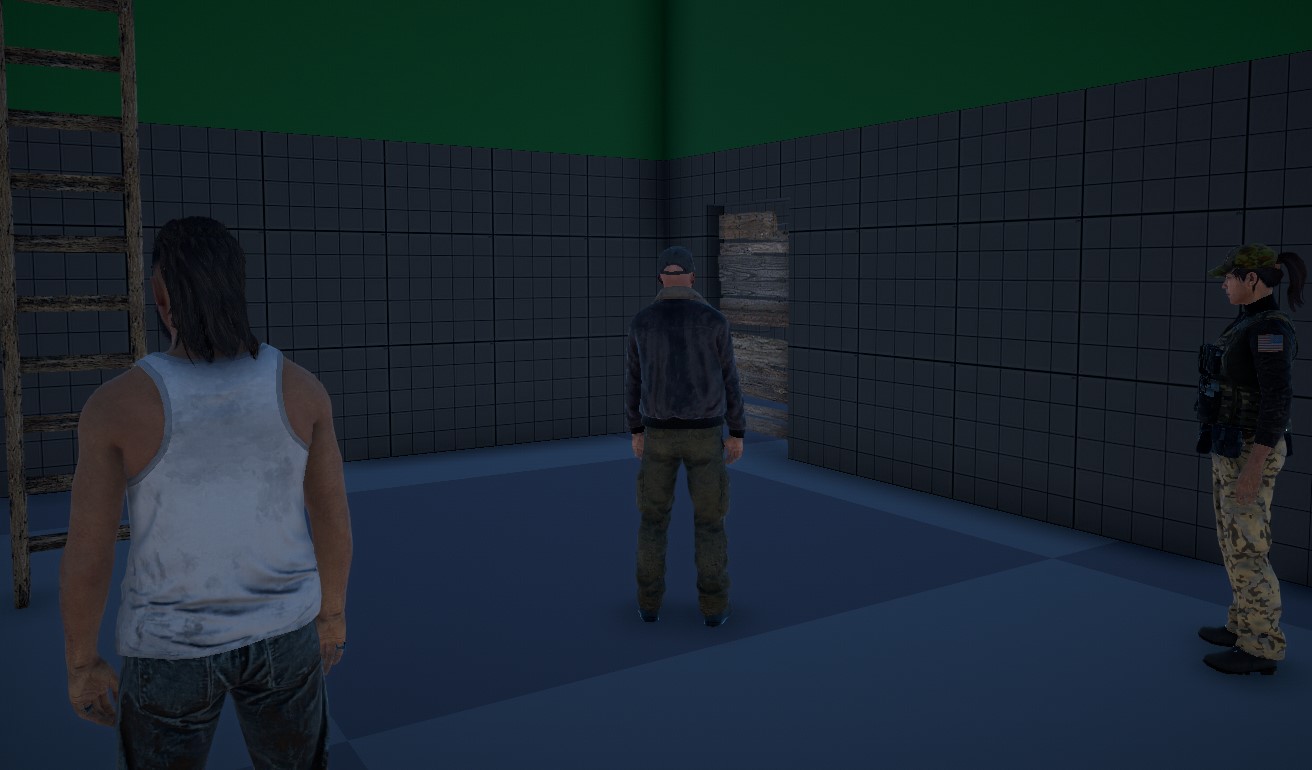
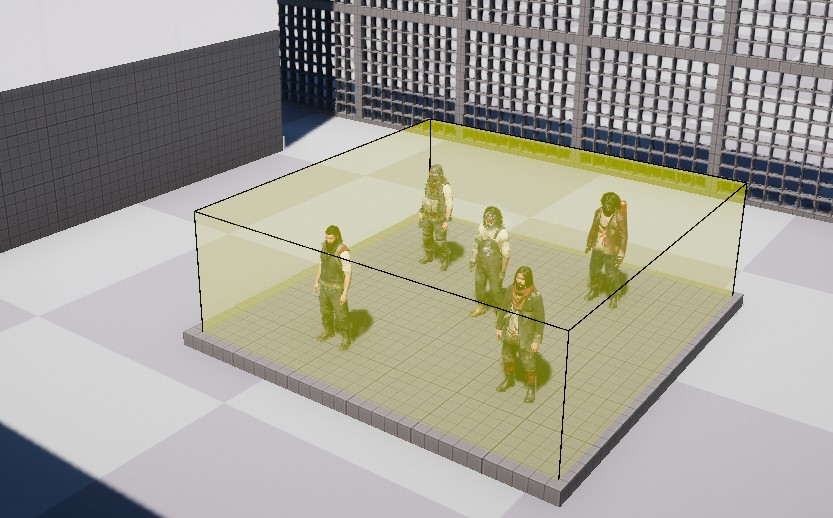
Blocked buildings with "chaos" elements. From left to right: zombie-like cult "angels", cougars, player friendly prisoners.
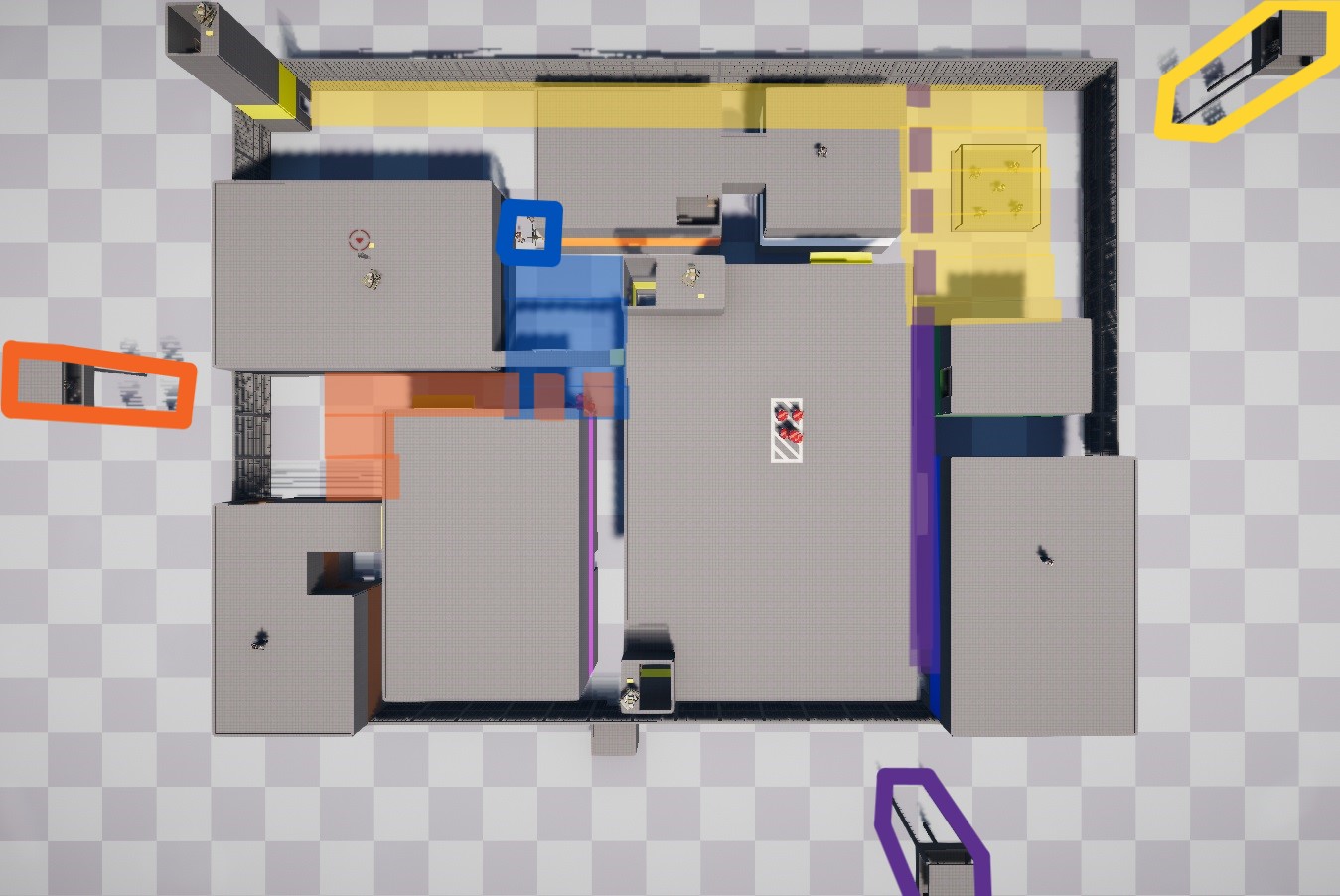
Areas with difficult traversal
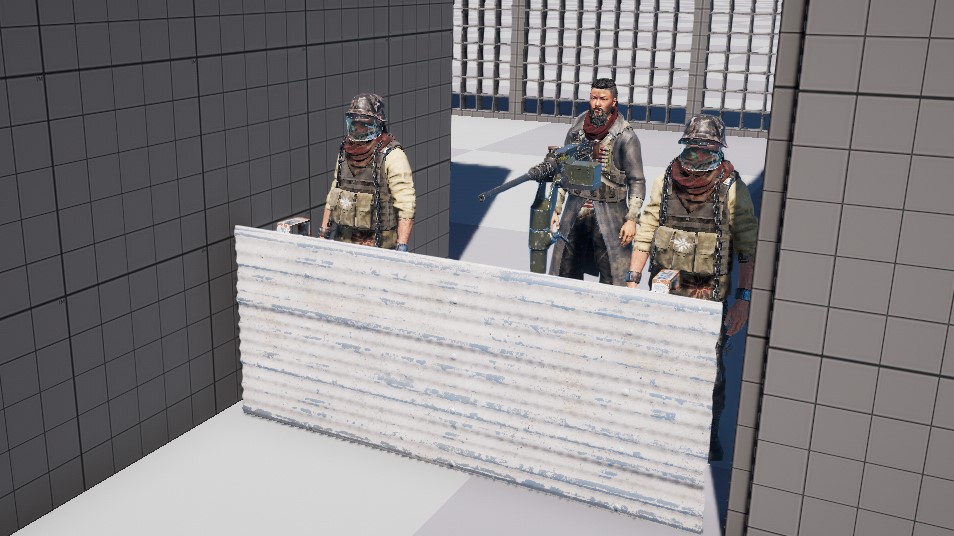
Internal barricade and its fire area (blue) and 3 external watch towers with snipers and their fire areas (yellow, purple and orange).
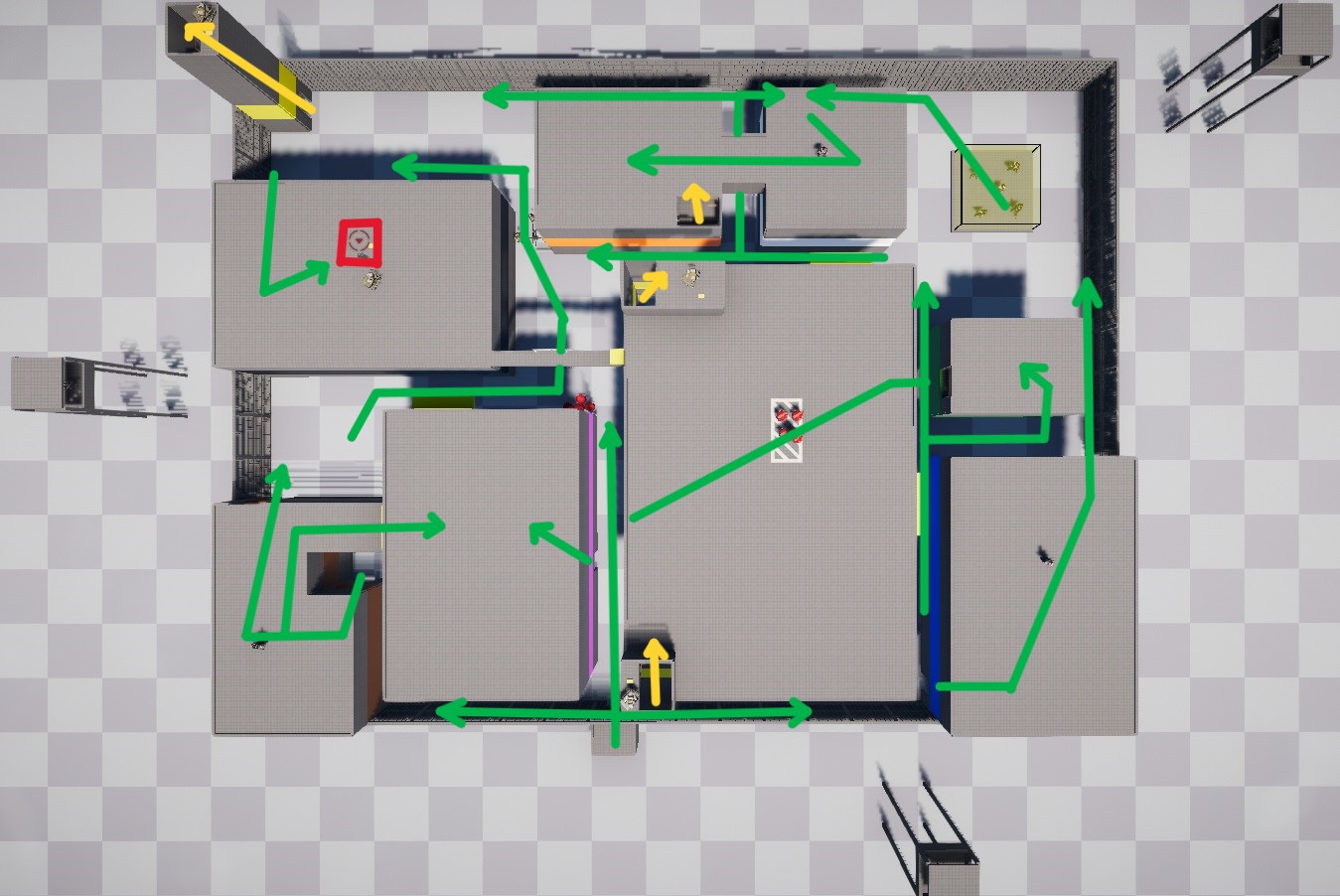
Non-linear design
Non-linear routes (green), access to rooftops (yellow) and objective (red).
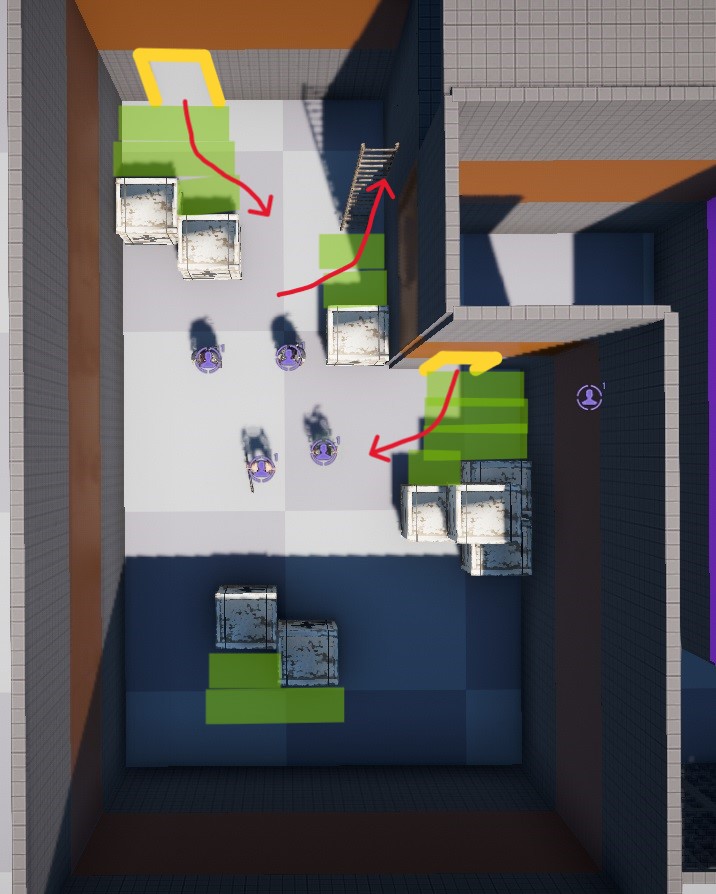
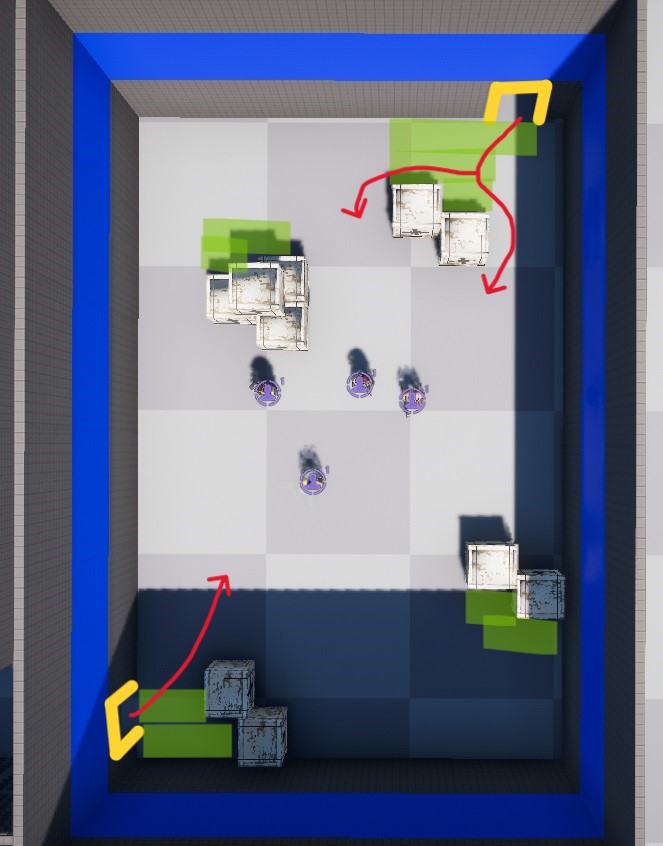
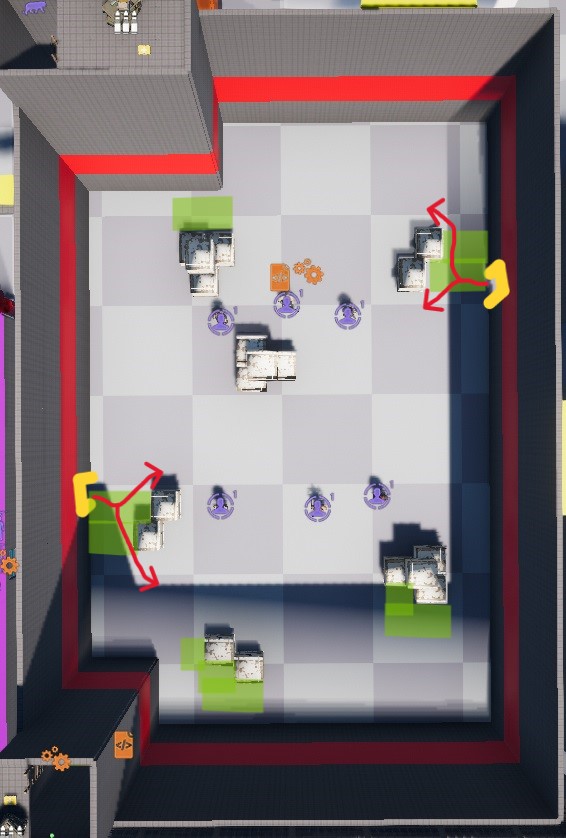
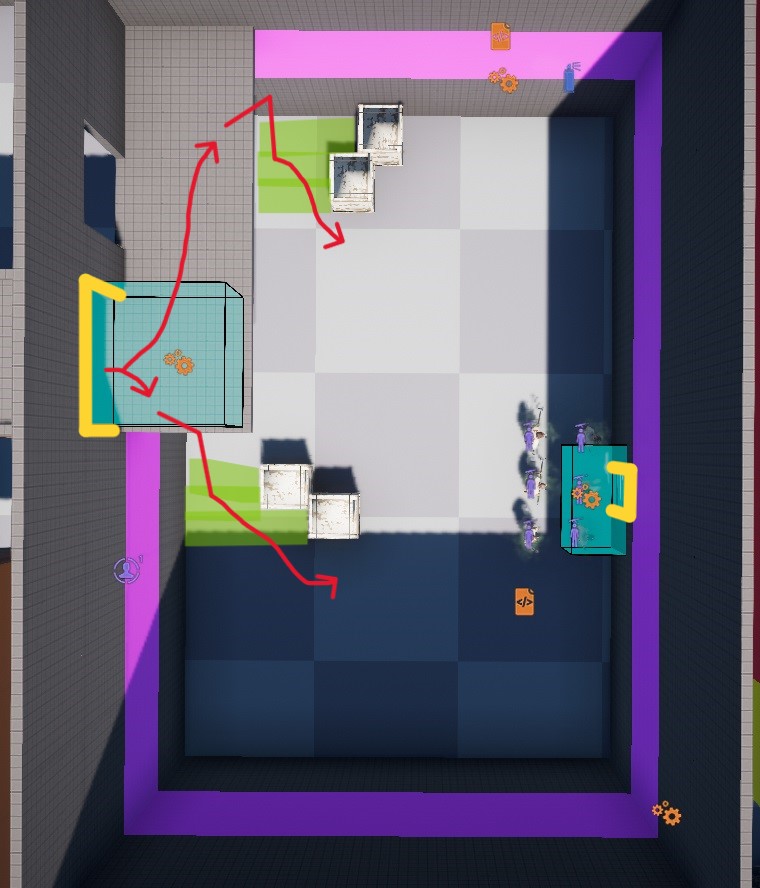
Cover placement

Brown room

Blue room
.

Red room

Pink room
.
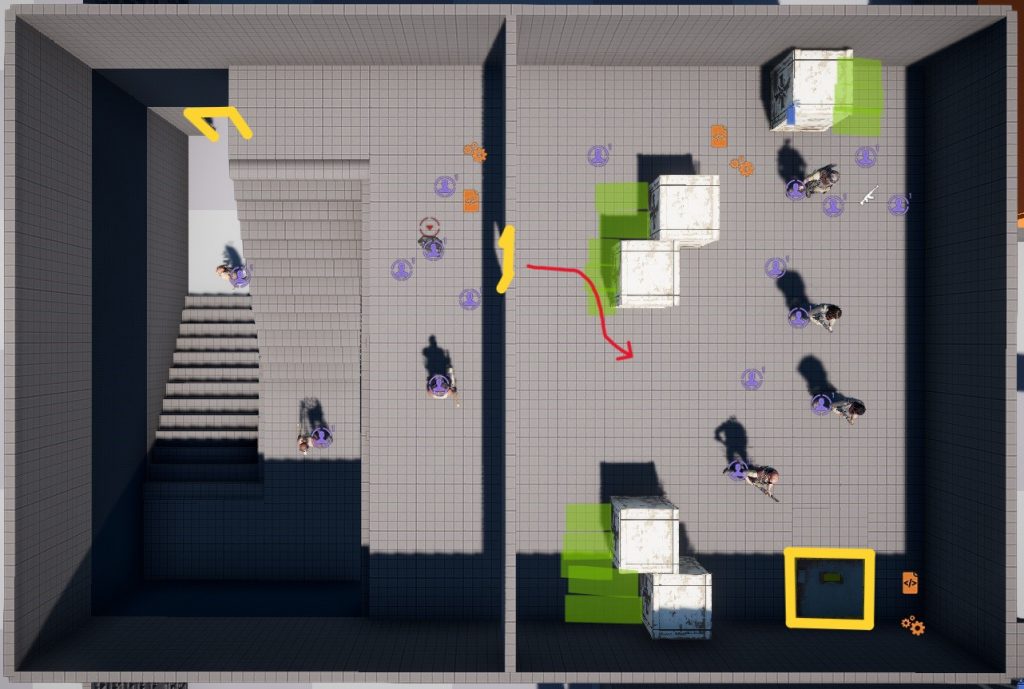
Black room
Trap door leads to boss fight.
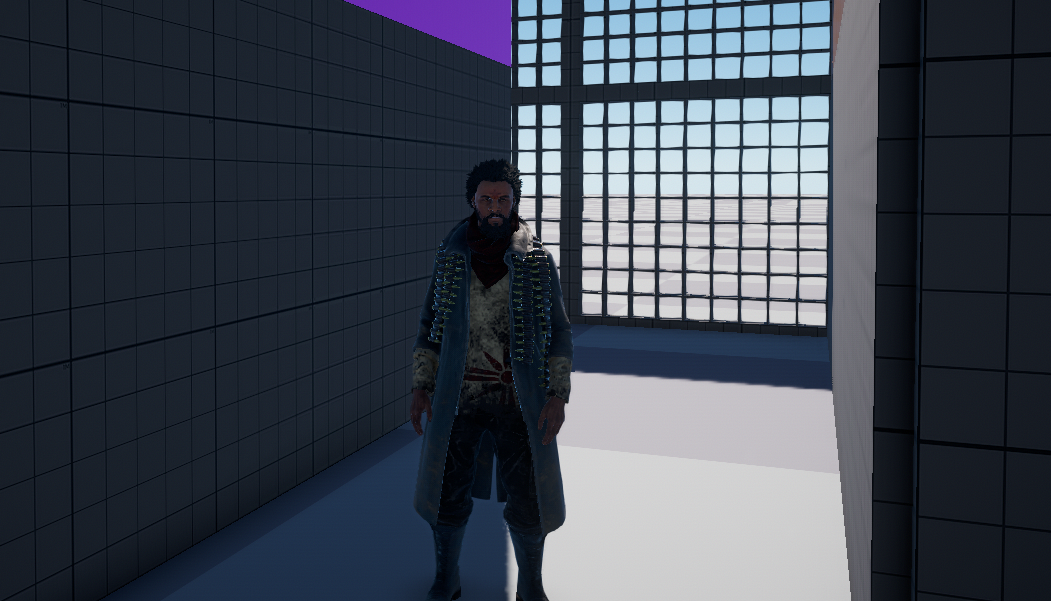
AI placement
Reasoning for the AI placement
- Wandering solo units: to increase sense of danger and urgency in player.
- Barricade: Mounted gun + 2 heavy units guard the fastest route to the objective. These units are placed in the critical path to deter players from rushing the level and encourage exploration, to find a way around this blockage.
- Small platoons: Groups led by “VIP” cult members guard some of the buildings(red, blue and brown rooms). These groups are meant to be the main opposition of the level, they are bound to the building and this way the player can escape if overwhelmed.
- “Chaos” elements: Placed in buildings with the entrance blocked by a breakable wooden barrier. This is optional content for the player, he can choose to open the blocked doors to increase the potential of emergent gameplay and interactions.
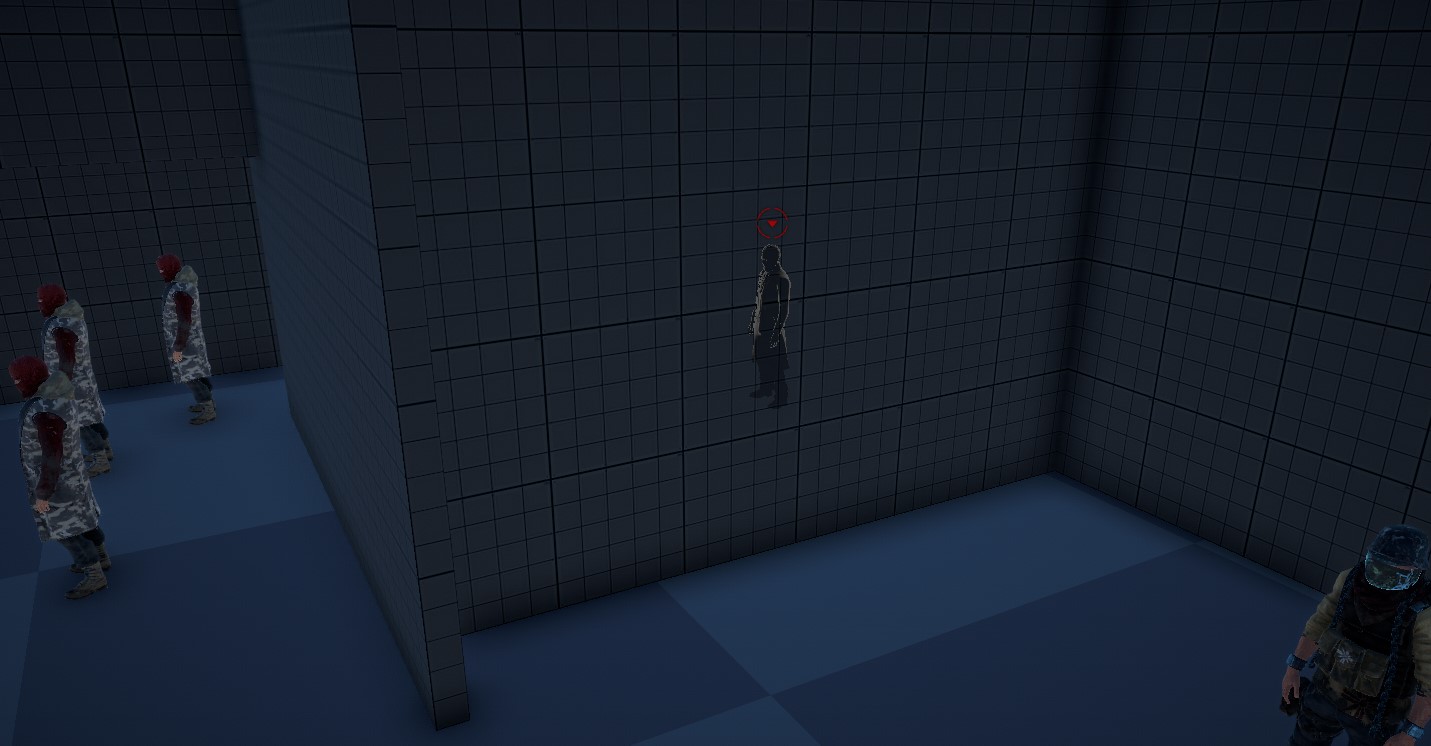
- Mindless cult “angels” (pink room): These are enemies, as in members of the cult, however their behaviour is a bit more erratic, they work as a substitute for the “zombie” archetype. This group is bound to a very small control area to give the player the possibility of “suprising” the enemy from behind if he finds the internal corridor conection. The small control area is unspawned when the player enters the room to permit normal battle.
- Group of cougars (orange room): As wild animals they will target the any player or NPC.
- Group of prisoners friendly towards the player (green room): Will target the player’s enemies and cougars.
- Snipers: Three towers outside the complex perimeter with snippers. Placed to make traversal of the alleys and rooftops more challenging.
- Rooftop guards: Three guards on the rooftops. Placed here to give an additional challenge to the traversal of rooftops.
- Boss bodyguards: Group of elite and heavy units that protect the target (black room). These units help increase the difficulty of the boss fight.
- Final obstacle: Once the target is killed this last platoon with elite units will spawn in the extraction point and fan out to search for the player. These serve as a last challenge to give content to the traversal from the boss fight to the extraction point. This is important as the player will have already eliminated some or most of the opposition by this point.